
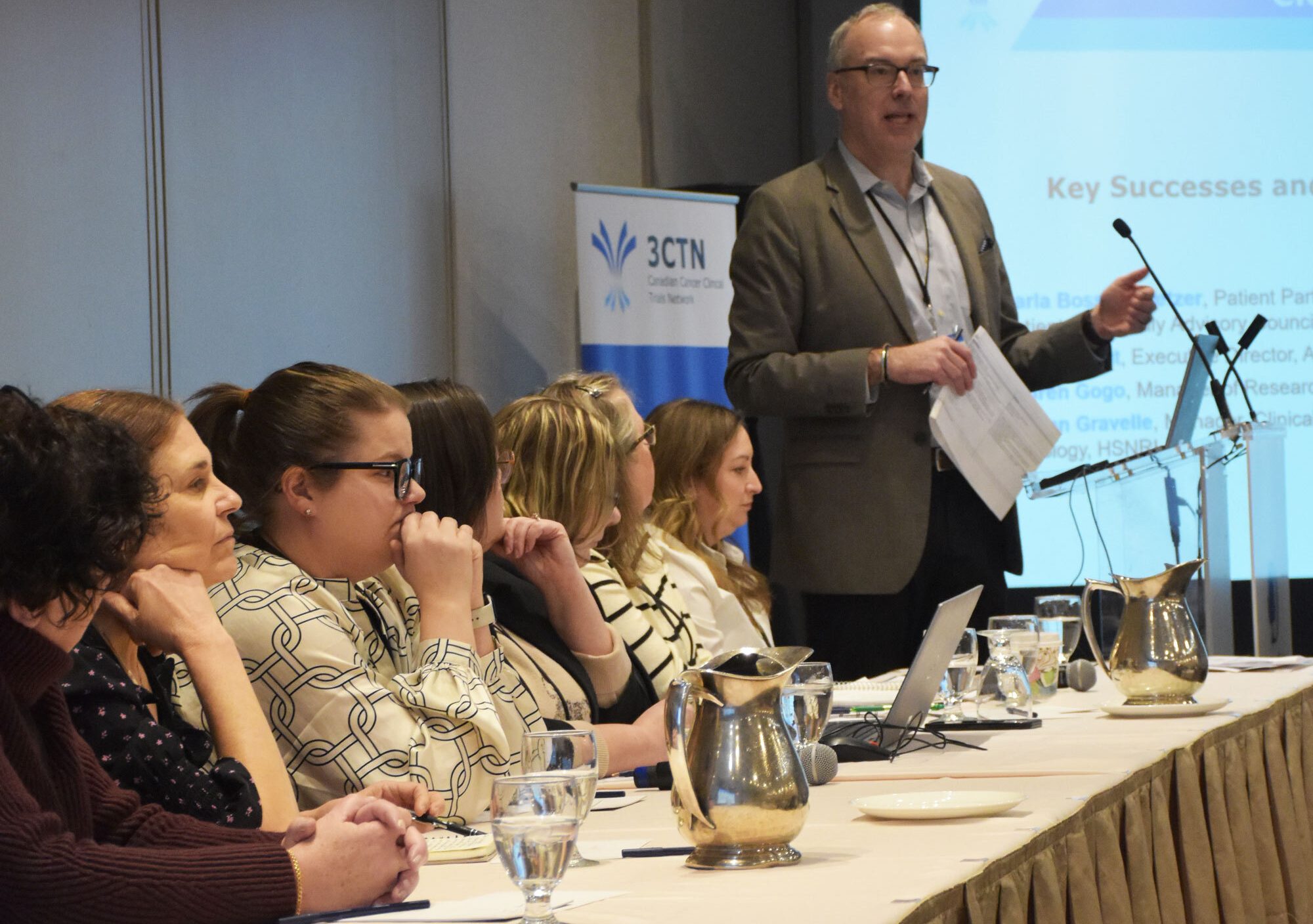
The Canadian Cancer Clinical Trials Network, its member cancer centres, and partners continue their work to eliminate barriers to clinical trial access for Canadians with cancer.
June 3, 2026 (Toronto) – The Canadian Cancer Clinical Trials Network (3CTN) today announced funding for six new projects that aim to overcome barriers that can make trial participation difficult and sometimes unfeasible for those living outside of major urban centres. Through applied use of the established Canadian Remote Access Framework for Clinical Trials (CRAFT), 3CTN funding is enabling these project teams to implement solutions that address challenges related to time, cost and local access to research opportunities.
Clinical trials play a vital role in the cancer care system, especially for patients who have exhausted standard treatment options. The CRAFT decentralized clinical trial model addresses the challenges faced by those living far from an active cancer centre trial site by using a hub‑and‑spoke “trial cluster” approach. In this model, the existing trial site provides central oversight and support for a local community health centre, enabling it to function as a satellite location that allows local patients to participate in more activities closer to home.
CRAFT was developed with support from the Canadian Partnership Against Cancer and through a collaboration of patient partners, clinical researchers, trial sponsors, healthcare institutions, research ethicists, and Health Canada representatives, all united by a shared commitment to advancing equity in accessing optimal cancer care options made available through clinical trial participation. Applied use of the CRAFT decentralized trial model creates more equitable access to clinical trials for all eligible patients in Canada by overcoming known regulatory, ethical, legal and logistical barriers.
Today’s newly announced projects are no exception, with some advancing the direct implementation of CRAFT while others are establishing enabling mechanisms to support its future deployment, such as the coordination of routine bloodwork and other tests to be done locally instead of necessitating travel to a trial site.
“My 9-year-old daughter was treated for acute myeloid leukemia at BC Children’s Hospital, and our family understands firsthand the importance of access to clinical trials. This funding will support applied use of an electronic consent process that patients and caregivers can participate in from home,” says Maura Cosgrave of BC.
“We are excited to support these teams that are poised to make a tangible difference for those with cancer in their respective regions,” says Dr. Janet Dancey, Scientific Director of 3CTN. “Where you live should not determine the cancer care you can access, and that includes clinical trials. Through CRAFT we are continuing to prove that while geographic and other barriers exist, they can be overcome through collaboration and ingenuity.”
“Expanding access to clinical trials is critical for improving cancer outcomes and advancing the Canadian Strategy for Cancer Control,” says Dr. Craig Earle, CEO of the Canadian Partnership Against Cancer. “By enabling participation closer to home, the CRAFT initiative helps address long-standing barriers and supports more equitable, inclusive research that reflects the diversity of people affected by cancer.”
“CRAFT projects are making a real impact by opening the door to clinical trial participation to more Canadians with cancer and strengthening clinical cancer research in our country,” says Dr. Christine Williams, Acting President of the Ontario Institute for Cancer Research, which hosts the 3CTN Secretariat. “Eliminating barriers to trial participation will make cancer research more equitable and I laud and congratulate these research teams on their efforts to do so.”